
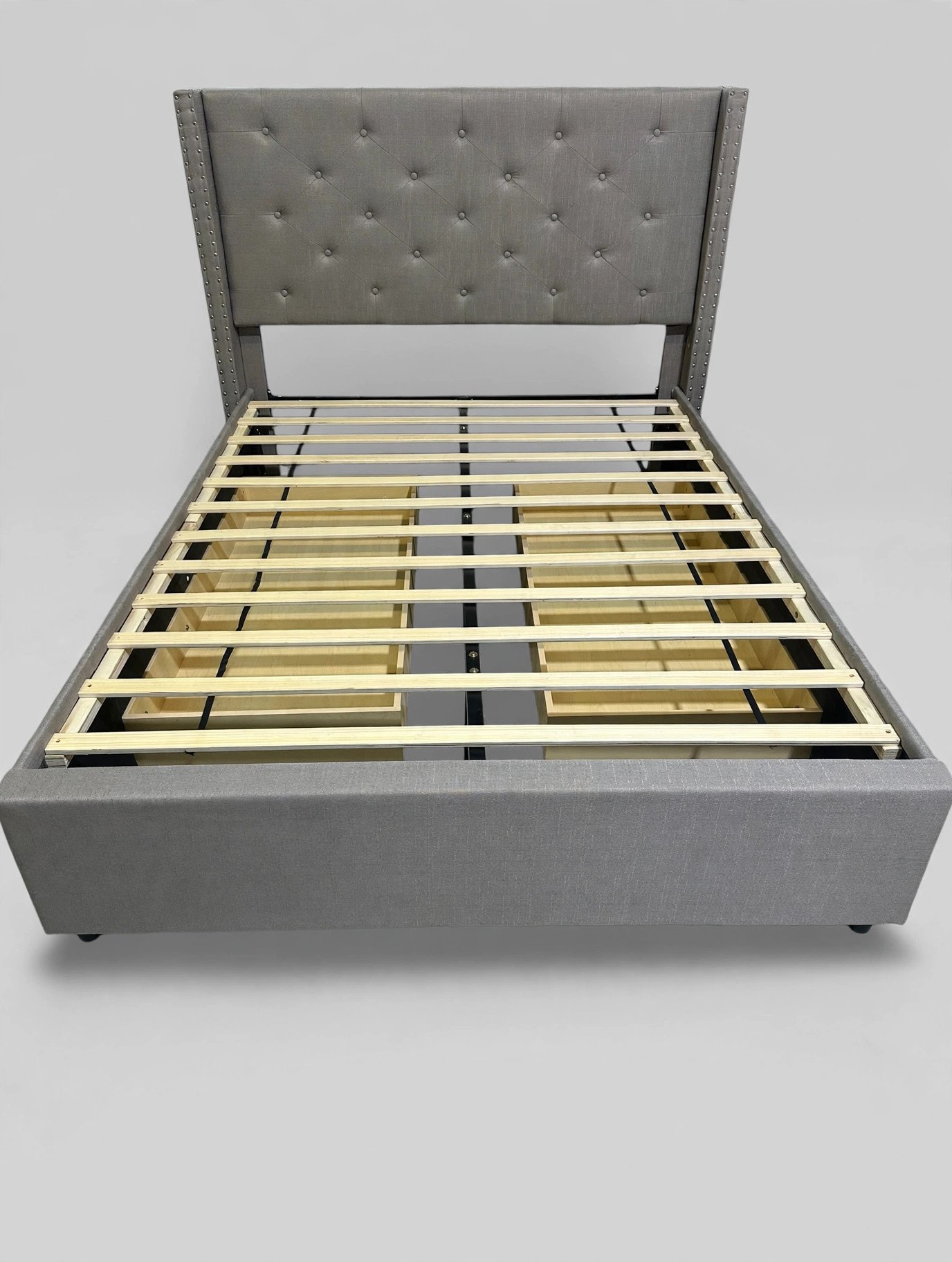
How to Arrange Bedroom Furniture in a Small Ontario Bedroom
Most small bedrooms fail for one boring reason: the bed went in first, in the first spot that looked right, and everything else was squeezed into whatever gap was left. Get the order right and a room of nine or ten square metres can feel calm, walkable, and genuinely restful. This guide works through the order that actually works, with the measurements that decide each step.
Step 1: Measure first, tape it out
Before you move anything, measure the room: length and width of each wall, the position of the door and which way it swings, the windows, the closet opening, and the radiators or baseboard heaters. Then mark the bed’s footprint on the floor with painter’s tape and walk around it.
Three gaps decide almost everything in a small bedroom. Leave about 60 cm (24 inches) of walking space on the side of the bed you use most. Leave about 90 cm (3 feet) at the foot of the bed if a wardrobe or dresser sits opposite it, so the drawers or doors can open. And remember that hinged wardrobe doors need roughly 90 cm of clear swing, while sliding doors need about 60 cm of standing room. If a gap is smaller than that, the piece does not fit there, however good it looks in the spot.
Step 2: Put the bed first, on the longest clear wall
The bed is the largest piece in the room, so it is placed before anything else is decided. The best spot in most small bedrooms is centred on the longest uninterrupted wall, with the headboard against it. That gives you a clear focal point, access from both sides if two people use the bed, and the most usable floor space left over.
Two placements to avoid unless the room forces your hand: floating the bed in the middle of a narrow room, which chops the floor into strips too small to use, and jamming the headboard against the door swing.
In a very small room — under about nine square metres — pushing one side of the bed into a corner is a fair trade: you lose one bedside but gain a long run of free wall for storage.
A queen is 60 inches wide and 80 inches long; a king is 76 inches wide. In a room under 3 metres wide, a king leaves almost no walking space on either side. Our queen vs king guide works through the room sizes each one needs. Check the bed’s own measurements before you order — the Herman – Black at $279 is 60 by 80 inches in Queen — and browse Cozy’s Beds range, $100 to $1,750 across 40 listings.
Step 3: Add storage that earns its floor space
Once the bed is placed, add storage in this order: one tall piece, then one low piece — and stop there. Two case pieces is the practical maximum in a small bedroom. The third piece is almost always the one that makes the room feel tight.
Put the tall storage — a wardrobe or a tall chest — on the wall opposite the foot of the bed, or on a side wall away from the main access side, where it does not dominate the first thing you see when you walk in.
If the room has no closet, a storage bed does the work instead: the drawers or lift-up base under the bed hold the folded clothes a dresser would hold, without taking a single extra centimetre of floor. The Sofia Storage – Grey at $480 (Queen 64 by about 84 inches) and the FDI Storage Beds – White at $389 both do this, and Cozy storage beds start at $312. Our guide to storage beds explains drawers versus lift-up bases.
Step 4: Three layouts that fit real rooms
Centred on the long wall. The classic: bed centred, a small nightstand or a wall shelf on the side you use most, wardrobe opposite. Works from about 2.9 by 3.2 metres upward, and best when two people use the bed.
Bed in the corner, storage on the far wall. Best for anything under nine square metres — a single sleeper, a guest room, or a child’s room. You lose one bedside and gain a long run of wardrobe and enough floor to dress comfortably.
Bed on the short wall, facing the door. This makes a long, narrow room read as open space rather than a corridor, and it frees both long walls for furniture — common in older Ontario houses and basement apartments. Avoid putting the bed under a window if it is the room’s main source of light.
The small things that make it feel bigger
Skip the nightstand on one side if the room is tight; a wall-mounted shelf at mattress height does the same job and takes up no floor at all. Go upwards instead of outwards: shelves above a desk, hooks on the wall, and storage under the bed replace what a chest of drawers would otherwise occupy on the floor. Keep the path from the door to the bed and the closet completely clear — that one open line is what makes a small room feel walkable.
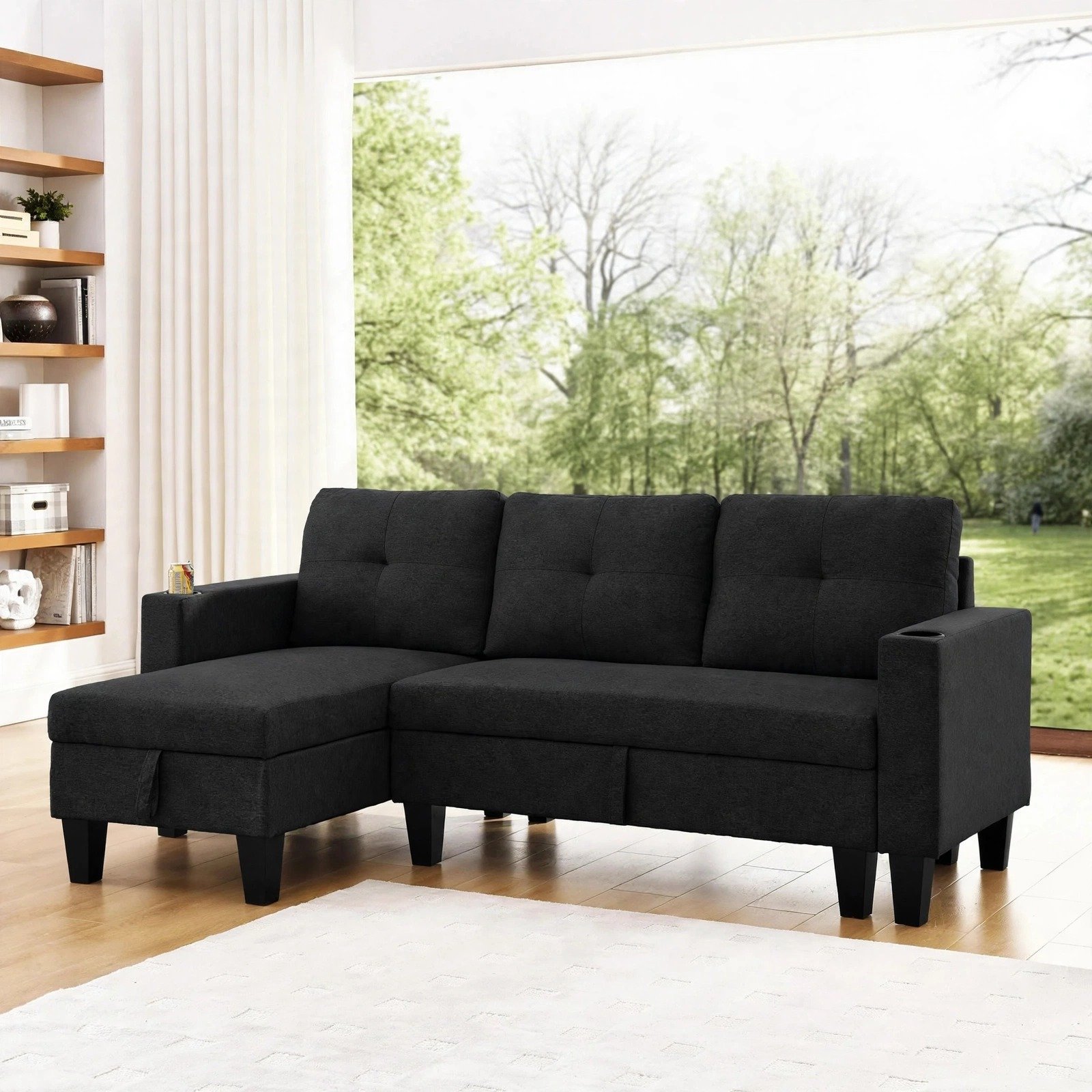
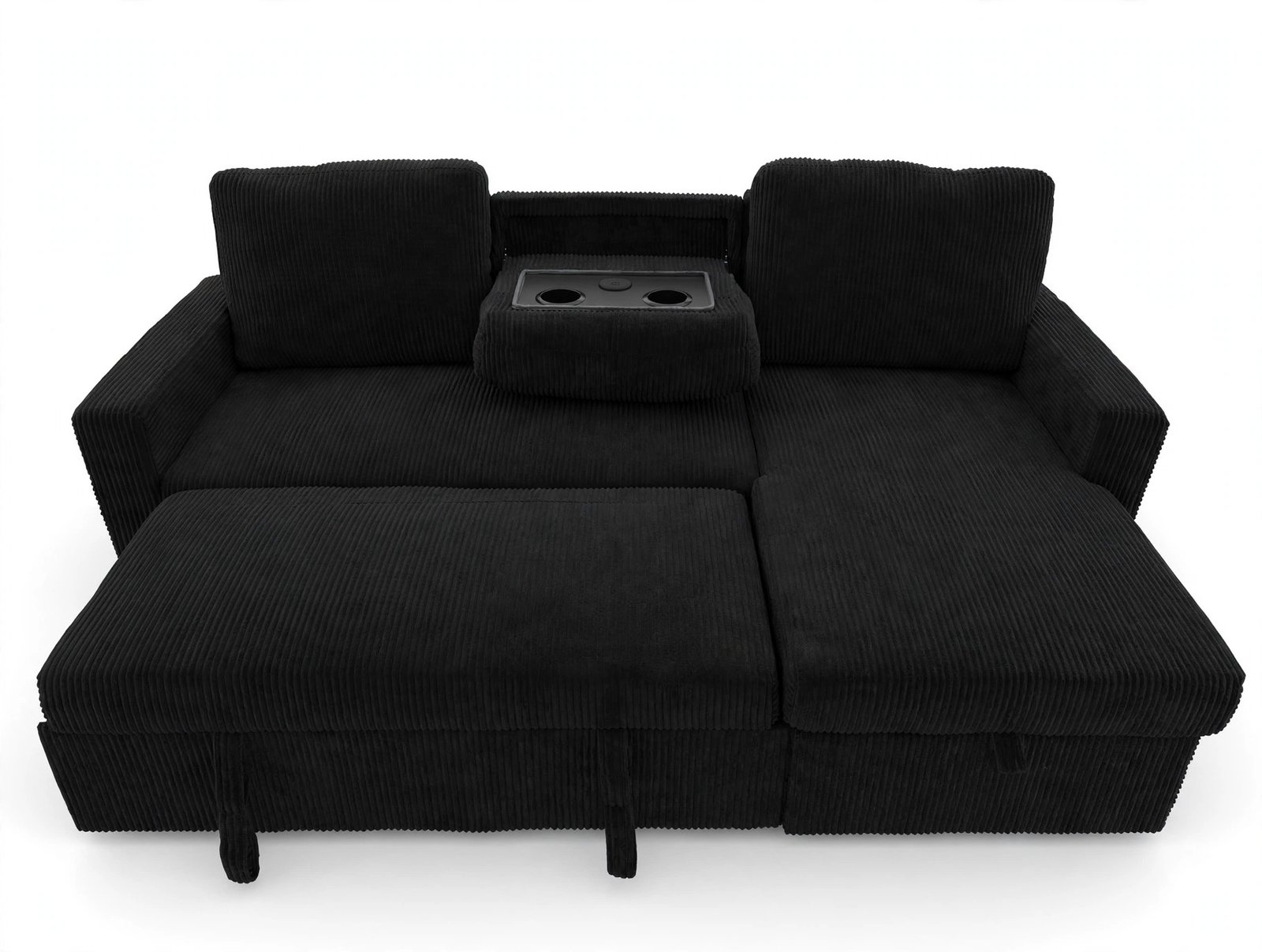
And measure the route into the room, not just the room itself. A bed frame that fits the bedroom perfectly is no good if it cannot get through the door, the hallway, or the elevator. Our measuring guide covers doors, hallways, and elevators before you order. If you are furnishing a small living room as well, the same thinking applies — our guide to arranging a sectional in a small Toronto condo works through that room the same way.
All Cozy Ontario orders are cash on delivery — you inspect your order before you pay. Delivery runs all over Ontario, and the delivery day and time are confirmed with you when you order. If you send us your room measurements, we will tell you plainly which bed size fits and what does not. WhatsApp us at +1 226-336-0249.
Prices checked November 2026.

Add a review
Your email address will not be published. Required fields are marked *