
Marble vs Ceramic vs Sintered Stone vs Wood: Which Dining Table Top Survives Daily Life?
A dining table top is the hardest-working surface in most Ontario homes. It takes hot plates, coffee rings, homework, craft projects, red sauce, and a knife that somebody definitely should not have used directly on the table. The top material decides how much of that daily life shows up afterwards. Here is a plain comparison of the four materials Cozy Ontario actually sells — marble, ceramic, sintered stone and wood — and which one suits your household.
The quick answer
If you want the easiest daily life, pick sintered stone or ceramic. If you want the most natural, one-of-a-kind look and you are willing to look after it, pick marble. If you want warmth, repairability and a surface that ages gracefully, pick wood. None of them is indestructible, and every comparison that claims one material wins on everything is selling something. The right choice depends on how your household actually eats.
Marble: beautiful, unique, and high-maintenance
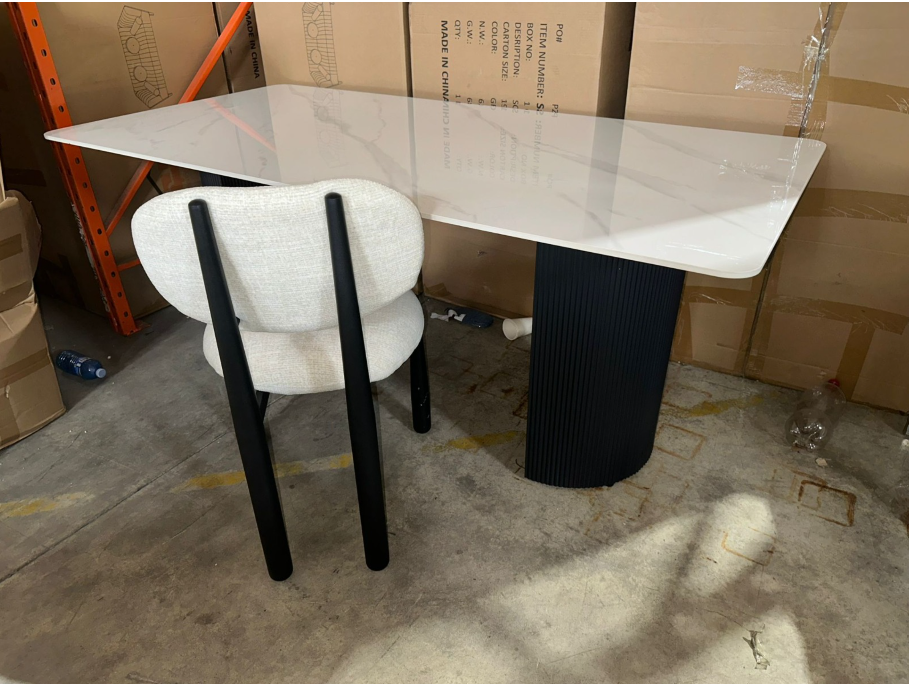
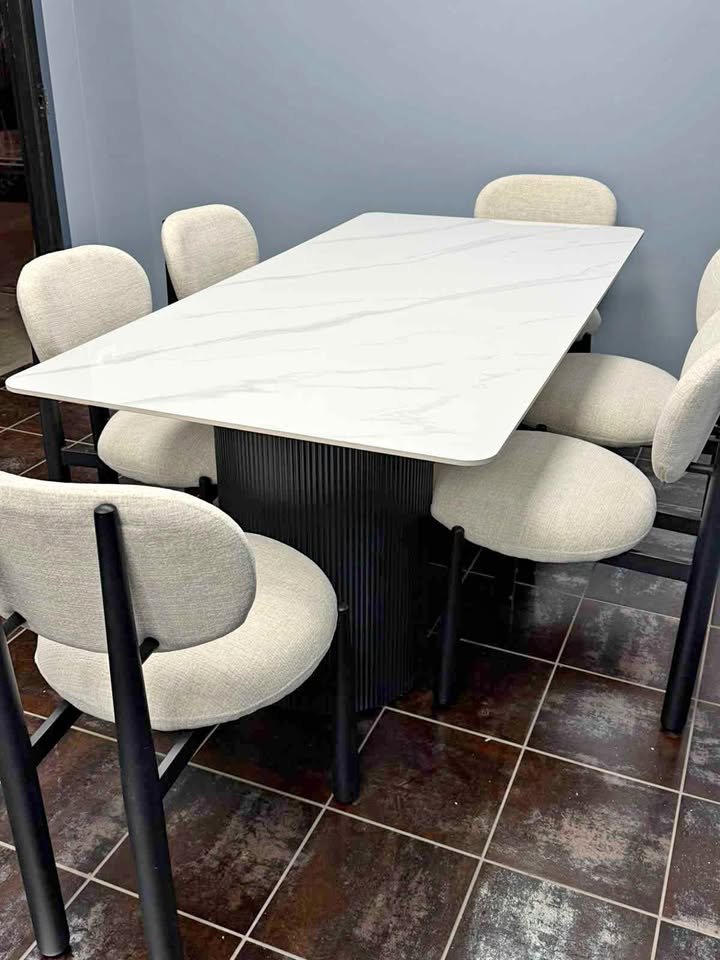
Marble is a natural stone, so no two tops have exactly the same veining. That uniqueness is the whole appeal, and it is why marble tops anchor formal dining rooms. The honest trade-off is porosity. Marble soaks up liquids more readily than the engineered materials, so spills — especially acidic ones like tomato sauce, wine or vinegar dressing — need wiping up quickly, and the surface usually needs sealing to resist stains. It is also softer than ceramic or sintered stone, so knives and dragged plates can mark it. Marble suits a household that eats carefully, wipes up straight away, and values the look enough to accept the upkeep. It does not suit a house full of small children eating spaghetti unsupervised.
Ceramic: the low-fuss stone look
Ceramic table tops are made by firing mineral materials at very high temperatures, which produces a hard, dense surface that looks like stone. They resist heat well, so a hot dish straight from the oven is far less of a worry than on wood, and they resist stains far better than marble because the surface is much less porous. Scratches are also less of a problem: a knife dragged across ceramic is unlikely to leave the mark it would leave on marble. The main weakness is the edge. A hard knock on a corner can chip ceramic, and a chip is harder to repair invisibly than a scratch in wood. Ceramic is the sensible middle ground for a busy family that wants a stone look without marble’s maintenance.
Sintered stone: the toughest of the four
Sintered stone is made by pressing mineral powders under extreme heat and pressure into a dense, non-porous slab. In practice it behaves like ceramic’s tougher sibling: very high resistance to scratches, stains and heat, no sealing needed, and most spills wipe away with mild soap and water. It can also mimic marble veining convincingly, which is why it has become popular for people who want the marble look without the marble upkeep. The trade-offs are the same family as ceramic’s: it is heavy, the edges can chip under a hard impact, and once chipped it is harder to repair cleanly than wood. If your table will see daily family meals, homework and hot dishes, sintered stone is usually the most forgiving choice of the four.
Wood: warm, repairable, and honest about its age
Wood — including solid wood, MDF and wood-look tops — brings warmth that stone cannot match, and it is the only material here you can realistically repair at home. A scratch can be sanded or touched up, a water ring can often be treated, and the surface develops character rather than just damage. The trade-offs are heat and water: a hot dish can mark wood, standing water can leave rings or swell MDF, and wood needs more protection from spills than stone. Wood suits households that like a natural look, use placemats and trivets without thinking about it, and would rather refinish a table in ten years than replace it.
Glass, and the question of weight
Glass also appears in the wider dining range and is worth one note: it wipes clean instantly and never stains, but it shows every fingerprint and smudge, and it needs more frequent cleaning to look good. All stone tops — marble, ceramic and sintered stone — are heavy, so check that your floor and your delivery route can handle the weight, and measure doorways before ordering. Our dining table size guide covers seats, shape and clearance, and our small-space dining guide helps if the room itself is tight.
Real Ontario models and prices
Cozy Ontario’s Dining range covers table tops in marble, ceramic, sintered stone, glass and wood, with sets from $220 to $1,650. The Marble Dining Table with 7 chairs is $1,650 in beige, a full table-and-seven-chairs set for a family dining room, with a table measuring 70.87 inches long by 35.43 inches wide. At the compact end, the Max 4 Piece Dining Table in Espresso is $430, a smaller MDF wood set for a condo dining corner. Browse the full Dining Sets range to compare tops side by side, and check each product page for the exact top material before you order — the material is listed there, not just in the headline.
Every price here is in CAD and is the final cash-on-delivery price. Delivery is available all over Ontario, with fast delivery across the GTA, and you can inspect your order before you pay. Delivery timing is confirmed with you when you order.
Not sure which top suits your household’s cooking and cleaning habits? Message Cozy Ontario on WhatsApp at +1 226-336-0249 with how many people eat at the table daily, and we will confirm the right material and size before you order.
Prices checked November 2026.

Add a review
Your email address will not be published. Required fields are marked *